Recently, I returned from an amazing trip to Italy and Greece. The sights, sounds, food (oh, the food!), and ancient art and architecture fed my brain and soul. I was moved beyond words upon my visit to the Vatican Museums, the Sistine Chapel, and St. Peter’s Basilica in Rome. Experiencing the visual feast of ancient sculptures, paintings, and tapestries inspired me to think about how, in today’s AI-driven world, we care more about speed than creativity, beauty, and human intellect.
Ask yourself: How did Michelangelo envision the breathtaking Creation of Adam and then commit to four years of backbreaking labor to create this masterpiece? The same question applies to Raphael and his famous fresco, School of Athens. In the simplest terms, each artist was committed to his vision and creative process to tell a unique story. Neither used shortcuts nor did they copy other artists’ techniques.
Great creative work requires originality, judgment, and a willingness to invest the time to bring an idea to life. Those qualities have always been at the heart of great marketing, too.
Upon further reflection, I pondered where the profession of Marketing is headed. Is our discipline in danger of becoming generic? I’m worried we’ve lost our way.
Are We Still Creative Leaders?
Our profession has always required creativity and exceptional communication skills. We are risk takers, problem solvers, and human behavior analysts. We pride ourselves on thinking through how to brand products and services by tapping into buyer psychology and positioning companies as more than “just a product or service.” Nevertheless, I believe many of us have surrendered our uniqueness and willingness to challenge conventional thinking in the quest for speed and cost-savings.
Before you become indignant, I realize that many of us have been forced to produce generic AI slop because companies view AI as an easy way to cut staff and churn out dull content and generic ideas for the sake of the exercise. However, that doesn’t mean we can’t retain our creativity.
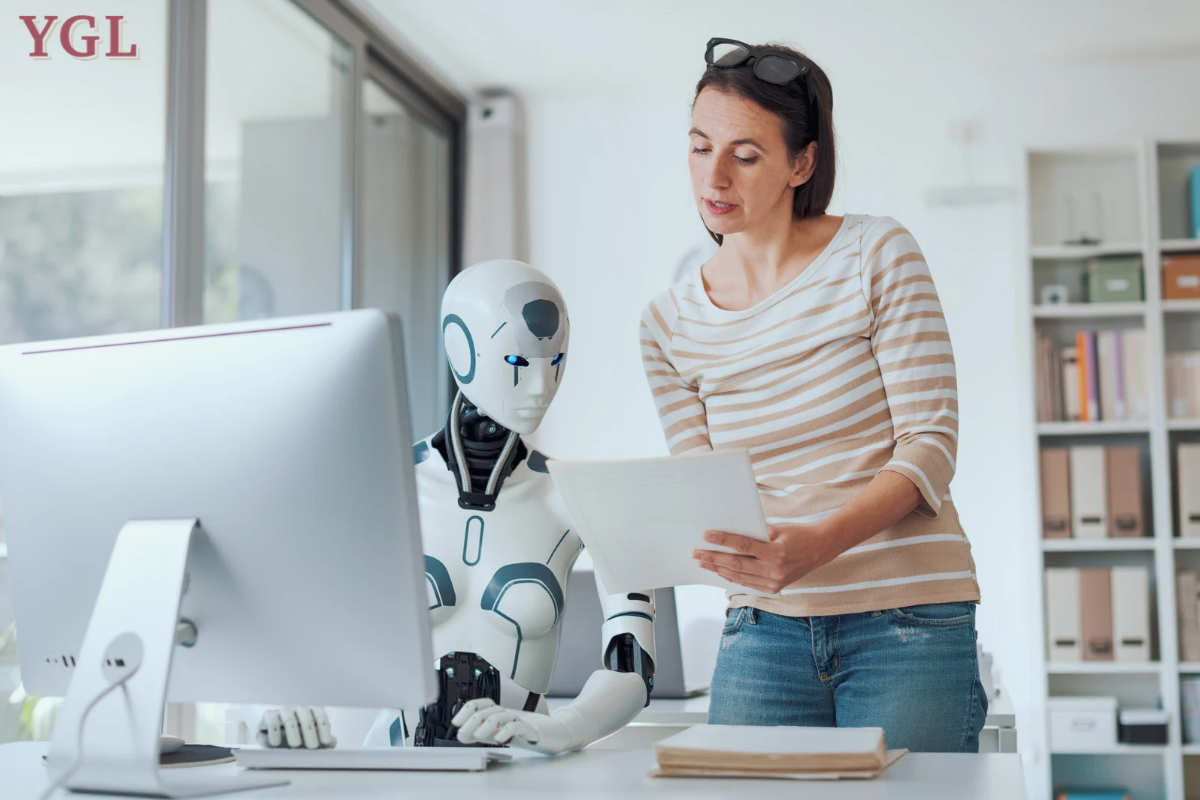
AI belongs in the toolbox, not in the creator’s seat.
As I’ve noted in a previous blog, marketers should use AI tools to automate the mundane so our teams can focus on what matters: high-level creative strategy, deeper client relationships, and, above all, TRUST.
Not All Companies Have Forsaken Creativity
So, what does human-led creativity look like in an AI-driven marketing environment? Look at these two companies that are embracing technology without sacrificing authenticity.
Take Dove’s Real Beauty Campaign. The 2004 campaign “Tested on Real Curves” replaced retouched models with real women. Subsequent campaigns like Evolution (2006), Real Beauty Sketches (2013), Choose Beautiful (2015), #ShowUs (2019), and Reverse Selfie (2021) show how Dove repeatedly challenged beauty norms.
Additionally, Dove publicly pledged never to use AI to alter women’s images and continues to build campaigns around authenticity.
Dove’s success demonstrates that authenticity isn’t the opposite of innovation.
Dove isn’t alone. Aerie offers another example of how a brand can use AI in the creative conversation without letting it become the dominant creative voice.
In their latest campaign, Aerie features actress Pamela Anderson asking a chatbot to create a visual campaign. However, the ad features real women, not AI. Brilliant!
This doesn’t mean the respective marketing departments don’t use AI tools. It means they understand that AI can support the creative process without replacing human judgment. Each company is committed to delivering a true, trusted product and is willing to stake its reputation on authenticity.
Human Control Over AI, Not the Other Way Around
Now is the time for our profession to publicly commit to human-led marketing.
Yes, we can and should use AI tools to provide complex data analysis in a fraction of the time. We should use AI to make us better marketers, not to eliminate the qualities that make marketing worth doing.
However, let’s commit to continuing to employ human graphic designers, content writers, and strategists to create genuine, inspired campaigns that connect with real people.
We may be flawed, but real people are always more interesting than Chatbots. 😊
I invite you to share your thoughts as we navigate this AI-driven world.
Yvonne Levine is the president of YGL Enterprises, Inc. As a strategic marketing consultant, she partners with B2B companies to develop data-driven marketing strategies, refine brand messaging, and deliver measurable results. Connect with Yvonne on LinkedIn.
 Yvonne Levine is the president of YGL Enterprises, Inc. As a strategic marketing consultant, she partners with B2B companies to develop data-driven marketing strategies, refine brand messaging, and deliver measurable results. Connect with Yvonne on LinkedIn.